

Blog
Neckband vs Earbuds: Which is better Wireless Audio Comparison for Your Daily Life

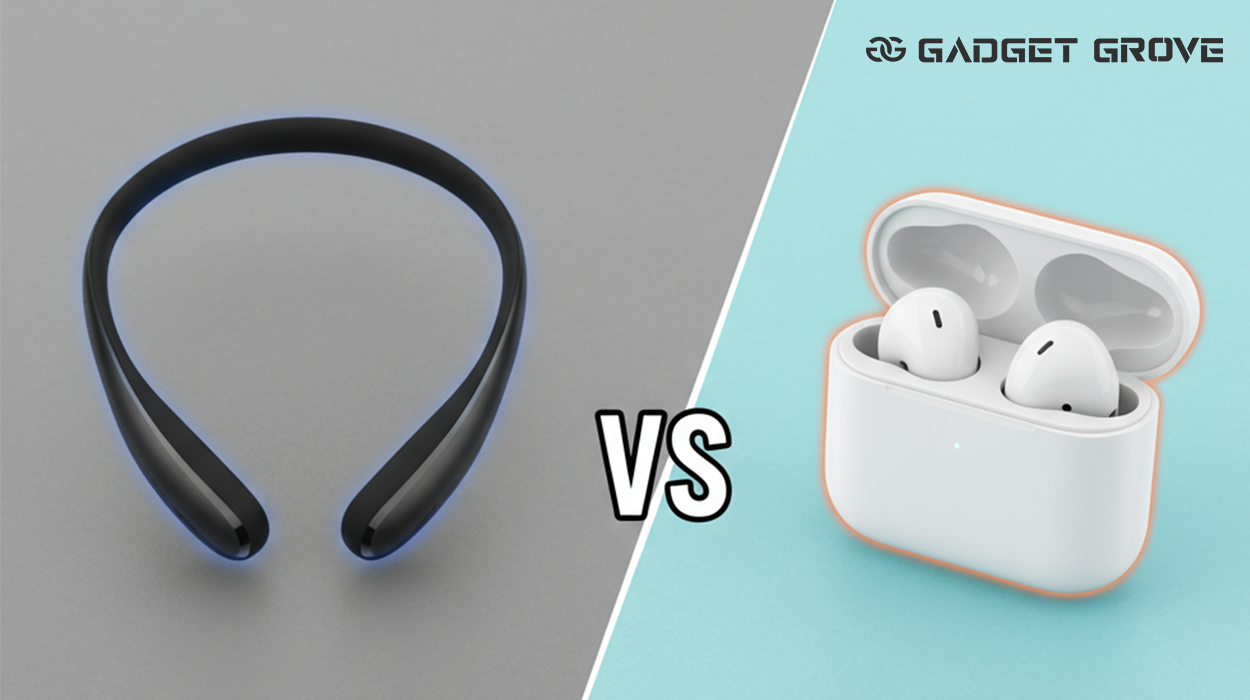
In the world of personal audio, two dominant styles have taken over: the sleek, minimalist True Wireless Earbuds (TWS) and the secure, long-lasting Neckband Headphones. If you’re looking to cut the cord but aren’t sure which design is best for you, you’ve landed in the right place.
This isn’t about selling you a specific model; it’s about helping you understand the real-world differences between a neckband vs earbuds setup, so you can make a smart, informed decision based on your own lifestyle.
Understanding the Difference
Before we dive into the comparison, let’s quickly define what we’re comparing:
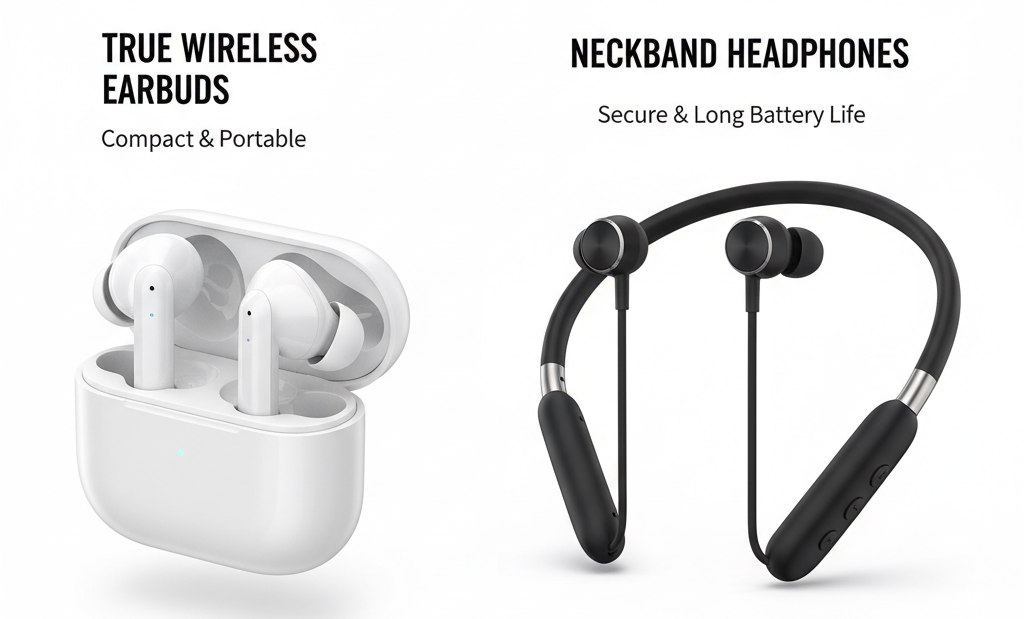
- True Wireless Earbuds (TWS): These are two completely separate, independent buds that fit directly into your ear. They require a small charging case for power and storage. Examples include AirPods or Samsung Galaxy Buds.
- Neckband Headphones: These have a flexible collar or band that rests around your neck. The earbuds are attached to this band by short wires. The band itself houses the battery, control buttons, and microphone.
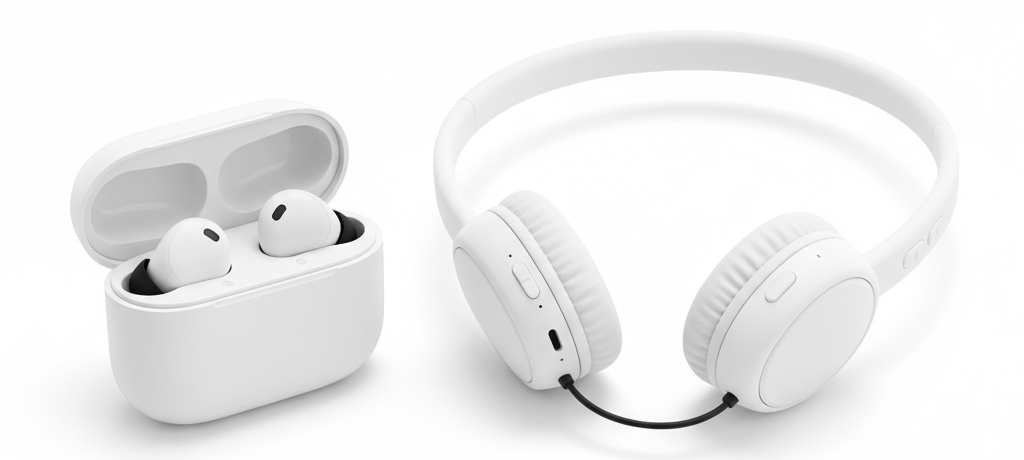
The Head-to-Head: Neckbands vs Earbuds
When you’re deciding between a neckband vs earbuds, your choice should come down to five core factors: battery life, fit, portability, sound features, and durability.
1. Battery Life and Usage Time
When it comes to powering through a long day, Neckband Headphones are typically the clear winner.
- Neckbands: The flexible collar provides ample physical space for a much larger battery cell. It’s common for a modern neckband to offer between 20 to 50 hours of continuous playback on a single charge. This makes them ideal for extended listening sessions, long flights, or a full week of commuting without needing to plug in every night.
- True Wireless Earbuds: Because the buds are so small, their internal battery is limited (usually 4 to 8 hours of playtime). While the charging case extends the total battery life (often up to 30 hours total), you still have to put the buds back into the case for a charge break every few hours.
2. Stability, Comfort, and Fit
This factor often depends on your primary activity, especially if you need Headphones for Running/Workout.
- Neckbands: They provide a remarkably secure fit. The weight of the band resting on your neck acts as an anchor. Even if one earbud pops out during a vigorous workout or gym/fitness session, it simply dangles from the neckband instead of falling to the ground and getting lost.
- True Wireless Earbuds: They offer ultimate freedom with zero wires. Premium models come with multiple ear tips and stability fins to ensure a secure fit, but they can still be a risk for users who move a lot. On the flip side, their lightweight design is often considered more comfortable for simple, low-activity use or all-day listening.
3. Portability and Convenience
If you value a pocket-sized setup, the choice is simple.
- True Wireless Earbuds: They are built for maximum portability. The buds and their case can easily slip into any pocket, making them the ultimate “grab-and-go” device.
- Neckbands: While they are light to wear, they are not pocket-friendly. You either wear them around your neck all day (which many find convenient for quickly popping the buds in and out) or you need to coil the band up and store it in a bag.
4. Sound Quality and Advanced Features
The gap between these two has narrowed significantly, but premium features often lean toward TWS.
- Features: High-end True Wireless Earbuds frequently dominate when it comes to cutting-edge technology like high-grade Active Noise Cancellation (ANC) and advanced sensors (like auto-pause when you remove a bud).
- Microphone Quality: For Earphones for Calls, many people prefer neckbands. Because the microphone is often housed in the neckband itself, it sits closer to your mouth than the mic on a tiny earbud, leading to clearer voice pickup, especially in noisy outdoor environments.
5. Durability and Price
Considering longevity and budget can help make the choice easier.
- Durability: The connected nature of neckbands makes them inherently more robust. There are no delicate hinges on a case to break, and the buds themselves are rarely dropped or lost. They also tend to have better Water Resistance (IPX Rating), making them reliable.
- Price: Generally, you can get a good quality Neckband Headphones model for a lower price than an equivalent feature-set in a True Wireless Earbuds model. If Price/Budget is your main constraint, neckbands often offer better Value for Money.
| Feature | Neckband Headphones | True Wireless Earbuds (TWS) |
| Battery Life | Excellent (20-50+ hours continuous playtime) | Average (4-8 hours per charge, extended by the case) |
| Portability | Lower (Requires a bag or worn on neck) | Excellent (Pocket-sized charging case) |
| Stability | Superior for workouts; never lost | Good (can fall out; easy to lose one bud) |
| Call Quality | Often better (Mic closer to mouth) | Improving (Uses multi-mic beamforming) |
| Durability | More robust; less prone to damage | Prone to damage if dropped; case hinges can break |
Which Wireless Earphones Are Right for You?
The best style isn’t universal—it depends entirely on how you plan to use them. Use this quick guide to find your answer:
- Choose Neckband Headphones if:
- You need all-day battery life and hate frequent charging.
- You are an active user who runs, bikes, or hits the gym often and requires a Secure Fit.
- Microphone Quality for business calls is a top priority.
- You want the most budget-friendly option without sacrificing Bluetooth Earphones Battery Life.
- Choose True Wireless Earbuds (TWS) if:
- You prioritize Portability and need something that fits discreetly in your pocket.
- You want the latest features like top-tier Active Noise Cancellation (ANC).
- You prefer a zero-wire aesthetic and a minimalist look.
- Your usage involves short bursts of listening (e.g., quick errands, short commutes).
For more detailed specs and reviews on various gadget options, a resource like Gadget Groves can be a great place to check for the newest models and in-depth analysis.
10 User Questions: Neckband vs Earbuds FAQ
To help you with your final decision, we’ve answered the 10 most common questions users search for online about the neckband vs earbuds debate.
1. Which is better for running or working out?
Neckbands are generally better for intense activities. The band secures the entire unit, ensuring the earbuds won’t fall out and get lost, providing excellent stability during movement.
2. Do neckbands offer better battery life than TWS earbuds?
Yes, almost always. The larger physical size of the neckband allows for a significantly bigger battery, leading to far longer continuous playtime (hours) compared to the small batteries in TWS buds.
3. Are earbuds or neckbands easier to lose?
True Wireless Earbuds are much easier to lose. Since they are two separate, tiny components that lack any connecting wire, a single earbud can easily fall out or be misplaced. Neckbands, being connected, have a higher resistance to loss.
4. Do neckbands typically have better call quality?
Yes, in many cases. The microphone on a neckband sits closer to your mouth (on the collar), which results in clearer, less muffled voice pick-up compared to the microphone positioned deep inside the ear on a small earbud.
5. Which style is more comfortable for long-term use?
This is subjective. Earbuds are lighter and less noticeable, making them great for low activity. However, some users find the pressure of the buds in the ear canal irritating over time. Neckbands distribute weight around the neck, which is often more comfortable for extended, hands-free periods.
6. Is TWS the same as an earbud?
“TWS” stands for True Wireless Stereo. While all TWS devices are earbuds, the term is used specifically to describe earbuds that have absolutely no physical connection to each other or to the audio source.
7. Which is better for mobile gaming?
True Wireless Earbuds often feature a dedicated Low Latency Mode that minimizes audio lag, making them the preferred choice for mobile gamers. Some newer neckbands are starting to incorporate this feature as well.
8. Are neckband headphones more durable?
Yes. The simple, connected design of Neckband Headphones eliminates the delicate hinges and small electronics found in earbud charging cases. They generally hold up better against daily wear-and-tear.
9. Which is the most portable option for travel?
True Wireless Earbuds are the most portable. Their small size and charging case make them incredibly easy to tuck away into any pocket or minimal luggage space, making them ideal for travel and quick everyday errands.
10. Which generally has better Active Noise Cancellation (ANC)?
While some premium neckbands offer good ANC, the highest-performing Active Noise Cancellation (ANC) technology is usually found in flagship True Wireless Earbuds. Their snug in-ear design, combined with advanced chipsets, often provides superior noise isolation.